

Gig Guides
Everything you need to know before you start, from choosing a platform to keeping more of what you earn.
Gig work has changed how millions of people earn a living. Some rely on it full-time. Others use it to earn extra money around a day job or between positions. Either way, the questions are usually the same: What does gig work actually pay? Which platforms are worth your time? What do you have to know about taxes?
These guides are built to answer those questions honestly, without the sales pitch. Whether you're just exploring or ready to start your first gig, you're in the right place.
What is Gig Work?
Gig work is any income you earn outside of a traditional employment relationship. Instead of a regular paycheck from an employer, gig workers get paid per task, trip, project, or delivery. That's the "gig" part: each job is its own engagement.
The scope is broader than most people expect. Gig work includes driving for Uber or Lyft, delivering food and groceries with DoorDash or Instacart, completing odd jobs through TaskRabbit, walking dogs on Wag, freelancing on Upwork, or selling handmade goods on Etsy. What ties it all together is the independent contractor model: you set your own hours, you use your own tools, and you're responsible for your own taxes.That independence is the main draw. It's also the part most people underestimate at first.
Who Is Gig Work For?
Gig work works best for people who are self-directed and comfortable with some income variability. It's a good fit if you:
- Want to control when, where, and how much you work
- Need income that fits around another job, school, or caregiving
- Are exploring a new field or building toward self-employment
- Have a skill, vehicle, or asset you can put to workI
t's less ideal if you need guaranteed hours, employer-provided benefits, or a predictable weekly paycheck.
Knowing that upfront helps you go in with the right expectations.
How Much Can You Make?
Earnings vary significantly based on the type of gig, your location, and how many hours you put in. Here's a realistic range:
Rideshare and delivery (Uber, Lyft, DoorDash, Instacart): Most drivers earn between $15 and $25 per hour after tips. High-demand markets and peak hours can push that higher. But earnings before expenses, like gas and vehicle wear, can look very different from take-home pay.
Skilled freelance work (Upwork, Fiverr, Toptal): Rates are all over the map. Beginners often start at $20 to $30 per hour. Experienced professionals in fields like design, development, or writing routinely earn $75 per hour or more.
Care and home services (Rover, Wag, TaskRabbit, Care.com): Rates depend heavily on your market. Pet sitters in major cities can charge $30 to $50 per visit. Handy workers and cleaners often set their own rates based on local demand.
Selling and renting (Etsy, Airbnb, Turo, Poshmark): Income here is more variable and depends on what you're offering, how you price it, and how you market it.One thing all gig work has in common: the amount you make is largely up to you.
Do You Need Any Qualifications?
Some gigs are open to almost anyone, while others require specific tools, skills, or certifications. Most gig platforms require:
- A smartphone
- Proof of ID or background check
- A vehicle (for driving or delivery gigs)
- Age verification (typically 18 or older)
- Bank account for payouts
Explore our guide: What Are the Requirements to Be a Gig Worker?
How Do Taxes Work for Gig Workers?
This is the part most new gig workers get surprised by. As an independent contractor, no employer withholds taxes from your pay. That's on you.
Here's what that means in practice:
You owe self-employment tax. This covers Social Security and Medicare, which would normally be split between you and an employer. As a self-employed worker, you pay both sides, currently 15.3% on net earnings.
You may need to pay quarterly. If you expect to owe $1,000 or more in taxes for the year, the IRS expects estimated payments four times a year. Missing these can result in penalties.
You'll receive 1099 forms. Platforms like DoorDash, Uber, and Instacart send 1099-NEC or 1099-K forms reporting what they paid you. Keep records of all income across platforms, even for amounts under the reporting threshold.
The good news: You can deduct business expenses to reduce what you owe. More on that below.
Can Gig Workers Claim Deductions?
One of the real advantages of gig work is the tax deductions available to self-employed people. These deductions lower your taxable income, which means you pay less at the end of the year.
Common deductions include:
Your vehicle. If you drive for your gig, this is usually your biggest deduction. The IRS allows you to deduct the costs you incur from driving your vehicle for work.
Phone and data. The portion of your phone bill used for work is deductible.
Supplies and equipment. If you bought a delivery bag, a phone mount, or tools for a job, those count.
Tolls and parking. These can be deducted when they're incurred for work purposes.
Health insurance premiums. Self-employed workers may be able to deduct 100% of premiums paid for themselves and their families.
Keeping organized records throughout the year makes tax time significantly easier.
What About Mileage?
If you drive for gig work, tracking mileage is one of the most valuable habits you can build. The IRS lets you deduct a standard rate for every business mile you drive, and it adds up fast.
For example: if you drive 10,000 miles in a year for deliveries, that's a potential deduction of $7,250 (using the 2026 IRS mileage rate). That directly reduces your taxable income.
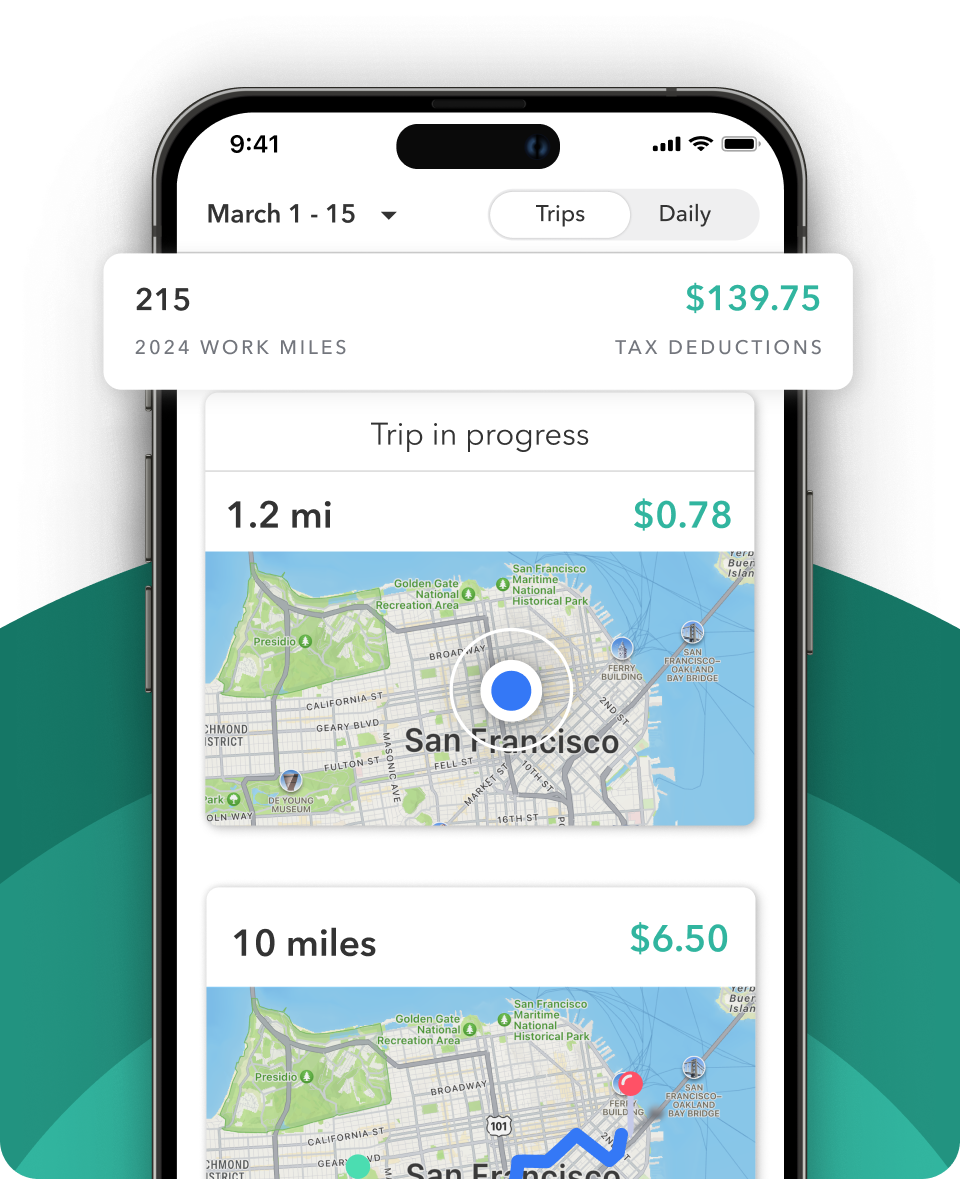
The catch is that you need documentation. The IRS requires a mileage log with the date, destination, purpose, and miles for each trip. Doing this manually is tedious, and gaps are common. A mileage tracking app like Everlance automatically logs your trips in the background, separates work and personal miles, and keeps your records IRS-ready year-round.
What Kinds of Platforms Offer Gig Work?
You can earn as a driver, tasker, creative, or seller. Here are some examples:
- Delivery & Rideshare: DoorDash, Uber, Lyft, Spark, Instacart, Shipt
- Freelance & Creative: Upwork, Fiverr, Toptal, Gumroad
- Care & Services: Rover, Wag!, Care.com, Taskrabbit
- Selling or Renting: Etsy, eBay, Airbnb, Turo, Poshmark
Looking for a specific platform? We’ve created tailored tax and pay guides for the top apps.
What’s the Future of Gig Work?
The gig economy is growing. In fact, over 60 million Americans have tried gig work and industry analysts predict that number will keep climbing.
As platforms expand and technology evolves, more people will be able to earn on their terms. At the same time, it’s becoming increasingly important for gig workers to understand their rights, taxes, and earning potential.
That’s why we built the Everlance Gig Guides: to help you navigate the gig economy with confidence.
Gig Platforms









.svg)
